American Battery Technology Company’s stock ticker, ABAT, has been showing up on a lot of watchlists lately — swinging between roughly $1.50 and $11 over the past year, riding headlines about Department of Energy grants and a major lithium project in Nevada. That kind of volatility gets attention, but it also means this is a stock where understanding the business matters more than reacting to the price chart alone.
This isn’t investment advice — I’m not a financial advisor, and nothing here is a recommendation to buy or sell. What follows is a plain breakdown of what American Battery Technology Company actually does, what’s been driving its stock price, and the specific risks worth understanding before you decide whether it deserves further research.
What Does American Battery Technology Company Actually Do?
American Battery Technology Company, headquartered in Reno, Nevada, and trading on Nasdaq under the ticker ABAT, is a critical minerals and battery materials company. Its business breaks down into two connected pieces.
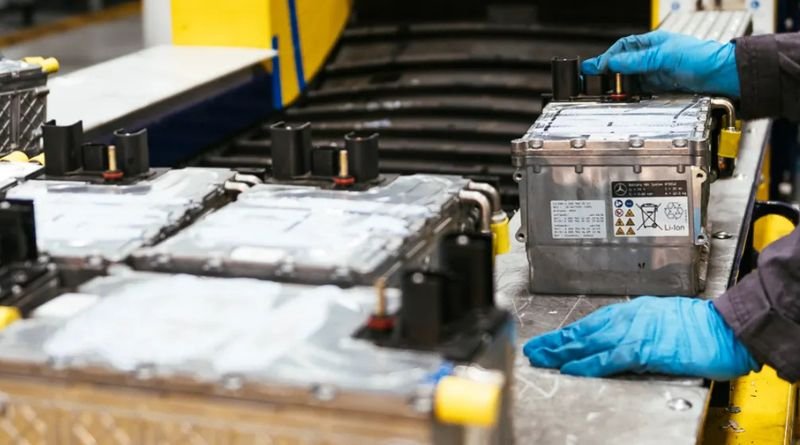
Lithium-ion battery recycling. The company has developed and is scaling an internally developed hydrometallurgical process to recycle lithium-ion batteries, recovering critical minerals like lithium, nickel, cobalt, and manganese from end-of-life batteries and selling the recovered materials back into the battery supply chain. This is the side of the business generating actual revenue today, through its Nevada recycling facility.
Primary lithium resource development. The company is also developing the Tonopah Flats Lithium Project in Nevada, a mining and refining project aimed at producing lithium hydroxide from a primary resource rather than recycled material. This project is earlier-stage and represents a longer-term, larger-scale opportunity if it reaches commercial production, but it’s not yet generating revenue.
Understanding this two-part structure matters for evaluating the stock, because the recycling business and the Tonopah Flats project are at very different stages — one is an operating, revenue-generating business scaling up, the other is a development-stage project still working through technical studies, permitting, and financing.
(Internal link opportunity: a guide on “how lithium-ion battery recycling actually works” would fit naturally here.)
Recent Stock Performance: A Volatile Year
ABAT’s stock has been genuinely volatile over the trailing 12 months, trading in a 52-week range spanning roughly $1.50 to $11.50 — a swing of more than 7x between the low and high. As of recent trading, shares have generally been changing hands in the $2.50 to $4.50 range, though a stock with this level of volatility can move meaningfully in short periods, so any specific price mentioned here should be treated as a snapshot, not a current quote. Check a live source like Nasdaq, Yahoo Finance, or your brokerage before making any decision based on price.
The company’s market capitalization has generally placed it in the small-cap category, roughly in the $300 million to $400 million range in recent data — a size that tends to come with higher volatility than large-cap stocks, both on positive news and negative news.
A few technical facts worth knowing: ABAT does not pay a dividend, and the stock carries a notably high beta (a measure of volatility relative to the broader market), meaning it has historically moved significantly more than the S&P 500 in both directions.
What’s Been Driving the Stock
A few specific developments have moved ABAT’s share price meaningfully over the past year, and understanding them gives useful context for the volatility.
DOE grant reinstatement. The U.S. Department of Energy had previously moved to cancel a competitive grant supporting the Tonopah Flats project, and the company successfully appealed to have the roughly $115 million grant award reinstated. Government funding decisions like this tend to move small-cap stocks with pending grants significantly, since they directly affect project financing and timelines.
Revenue growth and margin milestones. The company has reported a series of quarterly revenue increases tied to ramping operations at its Nevada recycling facility, including a recent quarter where it reported its first-ever positive gross margin — a meaningful milestone for a company that had previously operated at a loss on every unit of revenue.
Ongoing net losses. Despite revenue growth, the company continues to report negative earnings per share and negative EBITDA, reflecting the capital-intensive, early-stage nature of scaling both a recycling operation and a mining project simultaneously. This is a normal pattern for a development-stage resource and manufacturing company, but it’s a meaningful risk factor, not a footnote.
Analyst price targets. A small number of Wall Street analysts cover the stock, with price targets that have varied over time and, in some cases, sit meaningfully above the stock’s recent trading price. It’s worth remembering that analyst price targets reflect a firm’s specific model and assumptions, not a guarantee — and with only a couple of analysts covering a stock this size, target prices can shift quickly on new information.
(Internal link opportunity: a guide on “how to read analyst price targets and ratings” would fit naturally here.)
Key Risks to Understand
Being honest about risk matters more with a stock like this than with a stable, large-cap company, given the volatility and the company’s current financial profile.
The company is not yet consistently profitable. Recent quarters have shown revenue growth and a first positive gross margin, but the company still reports negative net income and negative EBITDA overall. Continued losses mean the company remains dependent on its cash position, financing, and grant funding to keep scaling operations, rather than funding growth purely from existing profits.
Project execution risk. The Tonopah Flats Lithium Project is still in development, dependent on permitting, financing, and construction milestones that haven’t been completed. Development-stage mining and refining projects commonly face delays, cost overruns, or financing challenges before reaching commercial production, and there’s no guarantee the project reaches full-scale operation on its current timeline or projected economics.
Dependence on government funding and policy. The DOE grant situation illustrates a real risk: federal funding decisions for critical minerals projects can change based on policy priorities, budget decisions, or political shifts, and a company this reliant on government support is exposed to that uncertainty in a way a fully self-funded company isn’t.
High volatility and small-cap liquidity risk. A stock with a beta well above 1 and a 52-week range spanning multiple multiples of its low price is inherently higher-risk than a stable, large-cap stock. Small-cap stocks can also have lower trading volume relative to large-caps, which can make prices more sensitive to individual large trades.
Commodity price exposure. Both sides of the business — recycled material sales and future primary lithium production — are tied to prevailing prices for lithium and other battery metals, which have historically been volatile and cyclical, independent of anything the company itself does operationally.
How to Research This Stock Further, If You’re Considering It
Rather than relying on any single data point, a more complete picture typically comes from reviewing a few specific things directly:
- The company’s most recent quarterly and annual SEC filings (10-Q and 10-K), which include detailed financial statements, risk factors, and management’s discussion of results — far more thorough than any summary article, including this one
- Cash position and burn rate disclosed in recent earnings reports, since this tells you how much runway the company has before it needs additional financing
- Permitting and construction milestones for the Tonopah Flats project specifically, since that project represents a large part of the company’s long-term value proposition
- Multiple current price quotes from a live source immediately before making any decision, given how quickly the price can move
Frequently Asked Questions
Is American Battery Technology Company (ABAT) profitable? Not yet on a net income basis. The company has reported revenue growth and recently achieved its first positive gross margin in a quarter, but it continues to report negative overall earnings and negative EBITDA as it scales both its recycling operations and its Tonopah Flats lithium project.
What does American Battery Technology Company actually make or produce? Its recycling division recovers critical minerals like lithium, nickel, cobalt, and manganese from end-of-life lithium-ion batteries and sells them back into the battery supply chain. Separately, it’s developing a primary lithium mining and refining project in Nevada that isn’t yet in commercial production.
Why is ABAT stock so volatile? As a small-cap, pre-profitability company dependent partly on government grant funding and commodity prices, ABAT is exposed to several factors that can move the stock significantly — earnings surprises, project milestones, grant funding decisions, and broader sentiment toward lithium and critical minerals stocks.
Does ABAT pay a dividend? No. The company does not currently pay a dividend to shareholders, which is typical for an early-stage, growth-focused company still reinvesting in scaling its operations rather than returning cash to shareholders.
Should I buy American Battery Technology Company stock? That’s not something any article can answer for you responsibly. This overview is meant to help you understand the business and its risks, not to recommend a specific action. Given the volatility and early-stage financial profile involved, it’s worth discussing with a licensed financial advisor and reviewing the company’s actual SEC filings before making any investment decision.
Final Thoughts
American Battery Technology Company sits at an interesting intersection — an operating battery recycling business showing real revenue growth, paired with a larger, earlier-stage lithium project that carries real execution risk. That combination explains both the stock’s appeal to some investors and its significant volatility. If you’re researching ABAT, the most useful next step isn’t watching the price chart — it’s reading the company’s actual financial filings and forming your own view on whether the Tonopah Flats project and recycling scale-up are likely to play out on a timeline and economics that make sense for your own risk tolerance.
This article is for informational purposes only and does not constitute financial or investment advice. Stock prices, financial figures, and company developments change frequently — verify current information directly with the company’s SEC filings and a live market data source before making any investment decision.