Key Takeaways
- Thorough preparation enhances confidence and performance during interviews.
- Effective communication and body language are crucial for making a positive impression.
- Understanding common interview questions and practicing responses can reduce anxiety.
- Post-interview follow-up demonstrates professionalism and interest in the position.
Table of Contents
- Preparing for the Interview
- Mastering Body Language and Communication
- Answering Common Interview Questions
- Navigating Virtual Interviews
- Following Up After the Interview
Securing a job interview is a significant step toward landing your desired position. However, the interview process can be daunting. This guide provides actionable strategies to help you approach job interviews with confidence and poise. For additional insights, consider exploring these interview tips from Cook’d AI, a platform specializing in AI-driven mock interviews and personalized coaching to enhance your interview performance.
Preparing for the Interview
Thorough preparation is the foundation of a successful interview. Begin by researching the company’s history, mission, and recent developments. This knowledge not only demonstrates your interest but also enables you to tailor your responses to align with the company’s values.
Review the job description carefully to understand the required skills and qualifications. Reflect on your experiences that match these requirements and be ready to discuss them. Additionally, prepare thoughtful questions to ask the interviewer, showcasing your enthusiasm and engagement.
Consider rehearsing with a friend or mentor who can offer constructive feedback and simulate real interview conditions. If possible, record yourself answering practice questions, and review the recording to identify areas for improvement, such as speaking pace, tone, or body language. This self-review process helps you address nervous habits, refine your messaging, and boost self-assurance before entering the real interview room.
Furthermore, gathering intel about the interview process itself can bolster your readiness. Many companies now use AI-driven initial interviews or skills assessments as a first step. Research if your target employer employs such tools, and practice with similar online assessments when available. Reach out to current or former employees (for example, via LinkedIn) to gain insight into what you can expect from the interview format and company culture. The more you know, the less you’ll be caught off-guard on interview day.
Lastly, don’t neglect the logistics. Plan your route and transportation to ensure punctuality for in-person interviews, or run a trial connection for virtual appointments. Having backup plans for unexpected issues (such as traffic or tech glitches) minimizes stress and keeps you on track.
Mastering Body Language and Communication
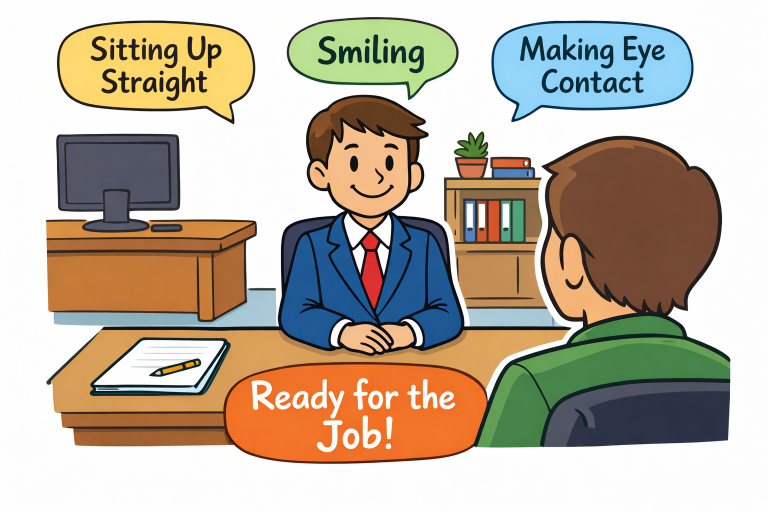
Non-verbal cues play a significant role in how interviewers perceive you. Maintain good posture, make eye contact, and offer a firm handshake to convey confidence. Smiling and nodding appropriately can also indicate your attentiveness and interest.
Effective communication involves clear and concise responses. Practice articulating your thoughts to avoid filler words and ensure your answers are coherent. Remember, how you say something can be as impactful as what you say.
Be mindful of your listening skills; interviews are a two-way interaction. Demonstrate active listening by summarizing or referring to your interviewer’s points, which shows engagement and respect. Practice soft skills such as empathy and openness, which employers increasingly value alongside technical expertise.
For those who struggle with interview anxiety, consider brief breathing or grounding exercises before the conversation. Even a few deep breaths can help steady your nerves and foster a calm, approachable presence as you enter the interview room or log onto a call.
In multicultural workplaces and remote/global teams, be sensitive to subtle differences in communication styles. Pausing before answering, clarifying ambiguous questions, and showing patience if there’s a language barrier all reflect professionalism and adaptability, traits that stand out to interviewers.
Answering Common Interview Questions
Anticipating and practicing responses to common interview questions can alleviate anxiety. For instance, when asked, “Tell me about yourself,” focus on your professional background, key achievements, and how they relate to the position.
Behavioral questions, such as “Describe a time when you faced a challenge at work,” require you to provide specific examples. Use the STAR method (Situation, Task, Action, Result) to structure your answers effectively.
Don’t just focus on what you did; highlight what you learned and how you grew professionally from each experience you share. If asked about weaknesses, frame your answer to show self-awareness and the steps you’ve taken to improve. For example, “While I used to struggle with tight deadlines, I developed better time-management strategies, such as calendar blocking and task batching, to keep projects on track.”
Increasingly, interviewers will look for evidence of adaptability, teamwork, and continuous learning. Be prepared to discuss occasions when you had to learn something new quickly or collaborate with a diverse group of people. Use specific, quantifiable results to illustrate your impact.
Navigating Virtual Interviews
With the rise of remote work, virtual interviews have become commonplace. Ensure your environment is quiet, well-lit, and free from distractions. Test your internet connection, camera, and microphone beforehand to avoid technical issues.
During the interview, look at the camera to simulate eye contact and maintain good posture. Dress professionally, even if the interview is conducted from home, to convey seriousness about the opportunity.
Minimize digital distractions by closing unnecessary tabs, silencing notifications, and decluttering your physical and virtual spaces. Keep essential documents (such as your resume or notes about the company) within easy reach but out of the camera’s view. Pay attention to your framing and background; neutral, tidy spaces are best.
When technology fails (as it sometimes does), remain composed and communicate promptly with your interviewer. Having a backup plan, such as a phone number to call or a secondary device, demonstrates your resourcefulness and commitment to the process.
Following Up After the Interview
Sending a thank-you email within 24 hours of the interview reinforces your interest in the position and appreciation for the opportunity. Personalize the message by mentioning specific topics discussed during the interview.
If you haven’t received a response within the timeframe the interviewer provided, it’s appropriate to send a polite follow-up email to inquire about the status of your application.
Take notes immediately after your interview while the conversation is still fresh. Record highlights, topics where you felt strong, and areas you want to improve for the next time. This self-feedback loop transforms each interview into an opportunity for growth, regardless of the outcome.
Successful follow-ups go beyond basic gratitude, reference something unique from your conversation, reiterate your fit for the role, and, if appropriate, include a thoughtful question that further emphasizes your engagement. This added touch sets you apart from other candidates and leaves a positive final impression.
If you ultimately do not receive an offer, don’t be discouraged. Reach out to politely request feedback and reflect constructively on the experience. Adopting a growth mindset and continuously refining your approach increases your odds of future success.
By implementing these strategies, you can approach job interviews with confidence and increase your chances of success in securing your desired role.